Welcome, dear readers! Today, I delve into the intricate world of accounting, with a particular focus on the purpose and scope of accounting in complex operating environments
I. What is Accounting?
According to Atrill and McLaney (2017), the field of accounting provides individuals with a comprehensive understanding of the fundamental principles and practical applications of accounting and finance. This provides a strong basis for making informed and effective business decisions in their prospective professional endeavors.
II. Who are the Users?
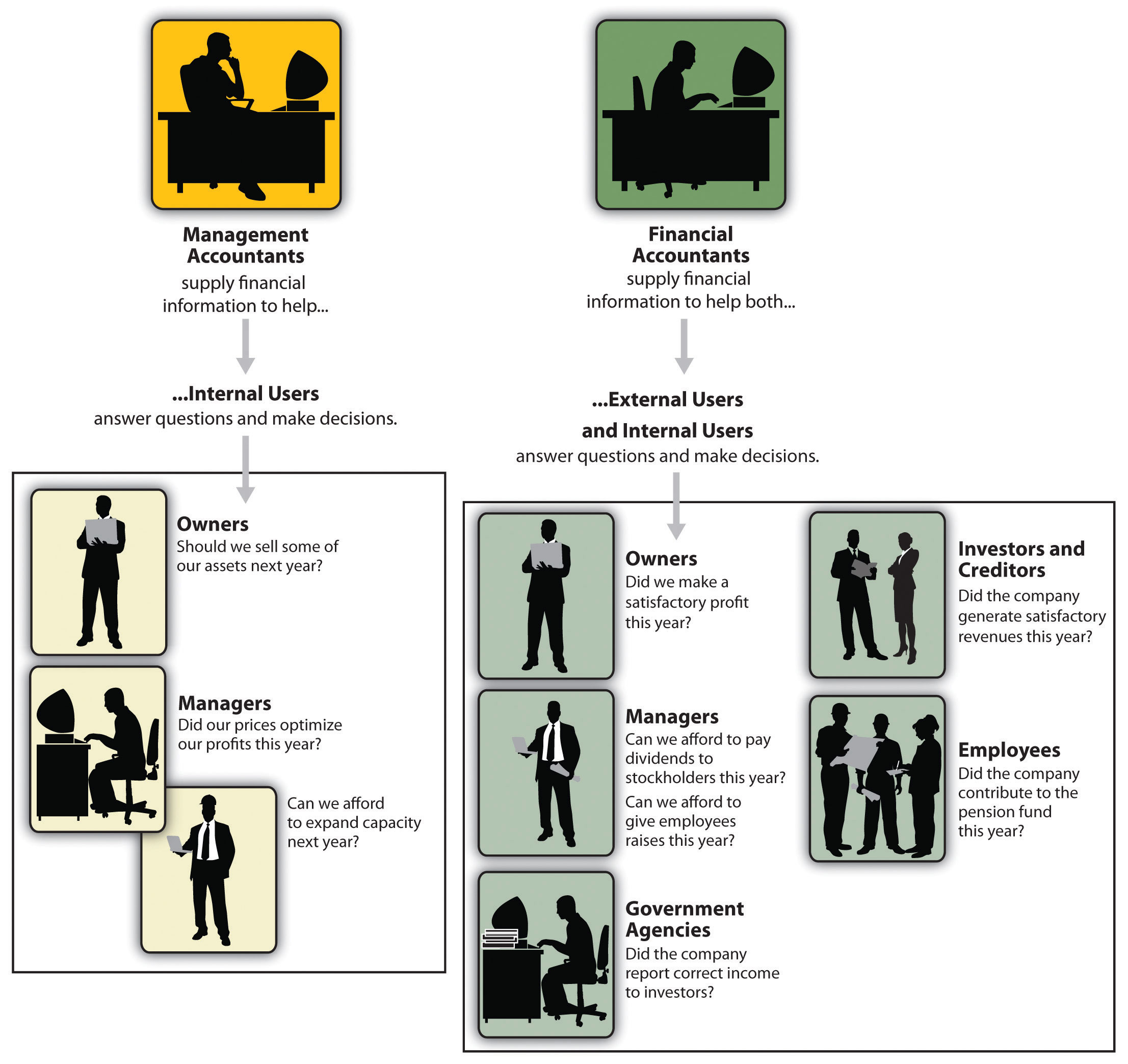
Accounting information is used by both internal and external users.
Internal users are those working within the company, such as owners, managers, and employees. They use accounting data for planning, controlling, and decision-making purposes (Atrill and McLaney, 2017; Weetman, 2019).
External users, on the other hand, are not affiliated with the business entity but use its accounting data. Examples include banks, suppliers, customers, investors, prospective investors, and tax authorities. They use this information to make decisions about whether to invest, extend credit, or do business with the company (Atrill and McLaney, 2017 ; Weetman, 2019).
III. Function of Accounting
When we think of accounting, we often imagine a world of numbers, spreadsheets, and financial statements. But accounting is so much more than that. It’s a vital function that plays a crucial role in the systematic management of an organization’s financial information.
3.1. Accounting: The Backbone of Decision-Making
Accounting ensures the accurate recording, analysis, and reporting of financial transactions. This provides a solid foundation for decision-making, regulatory compliance, and overall financial health.
In a discussion by Mellemvik, Monsen and Olson (1988), they highlighted the importance of management accounting in collecting, processing, and communicating information that assists management for control purposes.
3.2. The Role of Accounting in a Fast-Paced Business Environment
In today’s fast-paced business environment, management requires timely and accurate information to make informed decisions. To survive in the modern competitive markets associated with constantly changing technologies, organizations have to employ modern methods to continuously enhance control of their operations. This has led to the adoption of modern information systems as evidenced by the shift towards management accounting (Mellemvik, Monsen and Olson, 1988)
3.3. Accounting Information: A Key Element in User Perception
The need and appropriateness of ongoing and increased involvement of accounting information in the management process is increasingly obvious under the increasing credibility and relevance of such information in user perception (Mellemvik, Monsen and Olson, 1988). Although the data, information, and knowledge provided by accounting are not the only ones characterizing a particular economic unit, they are an essential element for analysis and assessment of the entity’s statement of assets (Mellemvik, Monsen and Olson, 1988).
3.4. In conclusion
The functions of accounting are crucial for the systematic management of an organization’s financial information. They provide a foundation for decision-making, regulatory compliance, and overall financial health. The role of accounting in organizations is not just economic but also involves control roles that cannot be explained in economic terms only.
So, the next time you think of accounting, remember that it’s not just about numbers. It’s about making informed decisions, ensuring regulatory compliance, and maintaining the overall financial health of an organization. It’s about the power of accounting
REFERENCES
Atrill, P. and Mclaney, E.J. (2017). Accounting and finance for non-specialists. 10th ed. Harlow, England ; New York: Pearson, pp.1–2.
Mellemvik, F., Monsen, N., & Olson, O. (1988). Functions of accounting — a discussion. Scandinavian Journal of Management, 4(3-4), 101–119. https://doi.org/10.1016/0956-5221(88)90003-6
Weetman, P. (2019). Financial And Management Accounting - Benefit of Budget. 8th ed. Pearson, p14.
Comments
Post a Comment